
Sorry, nothing in cart.
Welcome to Pills4cure
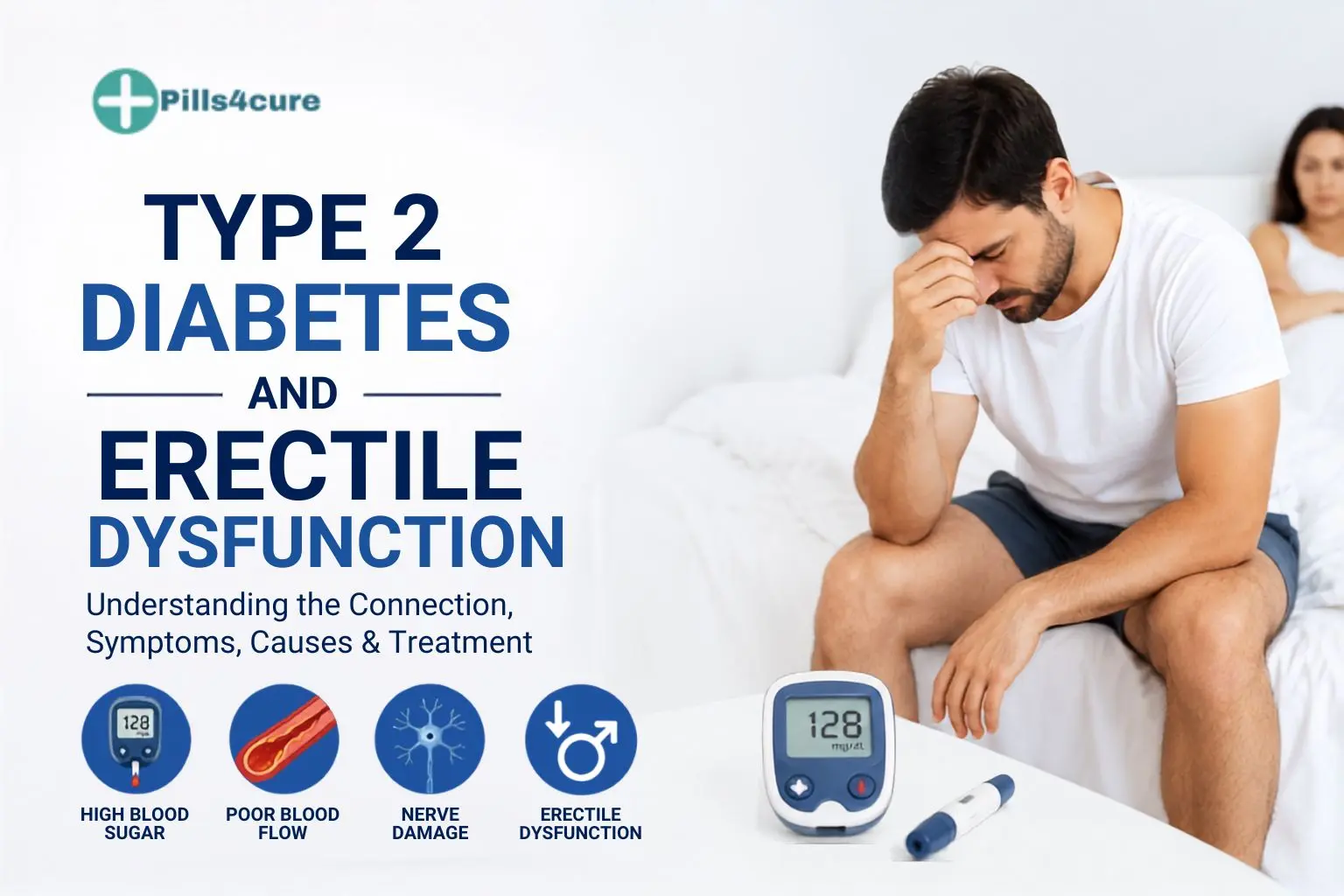
Type 2 Diabetes and Erectile Dysfunction
- By admin
- |
- General Blog
- |
Type 2 diabetes is one of the most common causes of erectile dysfunction (ED) in men. High blood sugar levels over time can damage the blood vessels and nerves that are essential for achieving and maintaining an erection. As a result, many men with diabetes experience difficulty getting or keeping an erection firm enough for sexual activity. In fact, men with diabetes are approximately three times more likely to develop erectile dysfunction than those without diabetes.
The good news is that erectile dysfunction caused by diabetes can often be managed successfully. Better blood sugar control, healthy lifestyle habits, and prescription ED medications can help many men regain satisfying sexual function.
Type 2 Diabetes Cause men sexually
Men living with type 2 diabetes may experience several physical and emotional health challenges, including diabetes-related erectile dysfunction (impotence). As a result, many men worry about how diabetes may affect their sexual health, confidence, and overall quality of life [1].
Sexual Problems That Type 2 Diabetes Can Cause
Type 2 diabetes can affect several aspects of male sexual Problems. Common sexual problems associated with diabetes include:
- Diabetes-related erectile dysfunction (ED)
- Reduced sex drive (low libido)
- Ejaculation problems, such as delayed or absent ejaculation.
- Difficulty achieving or maintaining an erection
- Low Libido (reduced sexual satisfaction and interest)
- Lower confidence and performance anxiety related to ongoing sexual difficulties
Why Does Diabetes Cause Erectile Dysfunction?
Diabetes can cause erectile dysfunction (ED) because persistently high blood sugar damages the blood vessels, nerves, and other systems involved in achieving and maintaining an erection. High blood sugar can also injure the inner lining of blood vessels (the endothelium), reducing its ability to produce nitric oxide—a chemical that helps blood vessels relax and widen during sexual arousal. This limits blood flow to the penis, making it more difficult to achieve or maintain a firm erection. An erection depends on healthy blood flow, proper nerve signaling, balanced hormone levels, and sexual stimulation. When diabetes affects any of these functions, erectile dysfunction can develop.
Why Do Men With Diabetes Have Erectile Dysfunction?
Not every man with diabetes develops erectile dysfunction, but the risk is significantly higher than in men without diabetes. Over time, diabetes can affect multiple systems involved in sexual function, making erections more difficult to achieve and maintain.
Diabetic Nerve Damage
High blood sugar can damage the nerves that control erections, a condition known as diabetic neuropathy. This weakens the nerve signals between the brain and the penis, making it difficult to achieve or maintain an erection.
Microvascular Disease (Damaged blood vessels)
People with type 2 diabetes can develop microvascular disease, a condition in which persistently high blood sugar damages the body’s small blood vessels. When the tiny blood vessels supplying the penis are affected, blood flow to the erectile tissue is reduced, making it more difficult to achieve or maintain a firm erection. This is one of the factors that contributes to diabetes-related erectile dysfunction (ED).
Low testosterone levels
Some men with diabetes have lower-than-normal testosterone levels, which can reduce sex drive (libido) and contribute to erectile dysfunction (ED). Studies suggest that about 20% to 40% of men with type 2 diabetes have low testosterone levels, Low testosterone may also affect energy levels, mood, muscle mass, and overall sexual function, making ED symptoms worse in some men.
Mood and mental health struggles
Living with type 2 diabetes can affect both physical and emotional well-being. Men with diabetes who have depressive symptoms are about three times more likely to experience erectile dysfunction (ED) than diabetic men without depression. Stress, anxiety, and depression can reduce sexual desire, interfere with sexual arousal, and make it more difficult to achieve or maintain an erection. Addressing mental health alongside diabetes management is an important part of improving sexual health.
Heavier weight
Being overweight or obese is common in men with type 2 diabetes and can increase the risk of erectile dysfunction (ED). Excess body fat is linked to inflammation, reduced testosterone levels, insulin resistance, and poor blood vessel function, all of which can affect erectile health. Research shows that men with obesity have up to a 30–90% higher risk of developing ED compared with men of a healthy weight. Losing weight through a balanced diet and regular physical activity may help improve erectile function and overall health.
Medication side effects
Some medications used to treat type 2 diabetes or related conditions, such as high blood pressure and depression, may contribute to erectile dysfunction (ED) in some men. If you notice sexual side effects after starting a new medication, speak with your healthcare provider before making any changes to your treatment.
Other Causes of ED
Although type 2 diabetes is a major cause of erectile dysfunction (ED), other health conditions and lifestyle factors can also contribute. Common causes include:
- Heart disease
- High blood pressure
- High cholesterol
- Obesity
- Low testosterone
- Smoking
- Excessive alcohol use
- Stress, anxiety, and depression
- Certain medications
- Kidney disease
- Sleep disorders, such as sleep apnea
In many men, ED results from a combination of physical and psychological factors rather than a single cause.
How Can Someone With Diabetes Overcome Erectile Dysfunction?
The good news is that diabetes-related erectile dysfunction (ED) is often treatable. While not every case can be completely reversed, many men are able to improve their erections and enjoy a satisfying sex life with the right combination of treatment and lifestyle changes.
Because every person’s health is different, there is no one-size-fits-all treatment. Your healthcare provider may recommend one or more of the following:
- Lifestyle changes
- Better blood sugar control
- Prescription ED medications
- Vacuum erection devices
- Penile injections
- Penile implants (for severe cases)
The best treatment depends on the underlying cause of ED, your overall health, and how well your diabetes is controlled.
How Is Diabetes-Related ED Diagnosed?
Your healthcare provider may recommend:
- Medical history review
- Physical examination
- Blood sugar (HbA1c) testing
- Cholesterol testing
- Testosterone level evaluation (when appropriate)
- Review of current medications
- Assessment of cardiovascular health
Identifying the underlying cause helps determine the most effective treatment.
Treatment Options
Improve Blood Sugar Control
Managing diabetes is the foundation of treatment. Stable blood sugar helps protect blood vessels and nerves from further damage.
Your healthcare provider may recommend:
- Taking diabetes medications as prescribed
- Following a balanced diet
- Exercising regularly
- Losing excess weight if needed
- Quitting smoking
- Limiting alcohol
Healthy lifestyle changes may improve both diabetes management and erectile function.
Prescription ED Medications
Many men with diabetes benefit from oral PDE5 inhibitors.
Common options include:
- Sildenafil (viagra)
- Tadalafil (cialis)
- Vardenafil (Levitra)
- Avanafil
These medications work by improving blood flow to the penis during sexual stimulation. They do not increase sexual desire but can help achieve and maintain an erection when sexually aroused.
Some men with long-standing diabetes may require additional treatments if oral medications are less effective.
Important: ED medications should only be used under the guidance of a healthcare professional. They are not safe for everyone, especially people taking nitrate medications for chest pain.
Other Treatments
If oral medications do not work, additional options may include:
- Vacuum erection devices
- Penile injections
- Intraurethral medication
- Testosterone therapy (only for confirmed deficiency)
- Penile implants in selected cases
Can Erectile Dysfunction From Diabetes Be Reversed?
In some men, improving blood sugar control, losing weight, exercising regularly, and treating underlying health conditions can improve erectile function.
However, if diabetes has caused significant nerve or blood vessel damage, complete reversal may not be possible. Even then, many men achieve successful erections with appropriate ED treatment.
Early treatment generally leads to better outcomes.
Tips to Reduce Your Risk
Protect your sexual health by:
- Keeping blood sugar within your target range
- Exercising at least 150 minutes each week
- Maintaining a healthy weight
- Eating a diabetes-friendly diet
- Avoiding tobacco
- Limiting alcohol
- Managing stress
- Getting adequate sleep
- Having regular medical checkups
When Should You See a Doctor?
Seek medical advice if:
- Erectile dysfunction persists for more than a few weeks.
- ED develops suddenly.
- You have chest pain or symptoms of heart disease.
- Your diabetes is difficult to control.
- ED medications are not effective.
Because erectile dysfunction may also be an early warning sign of cardiovascular disease, it should not be ignored.

Frequently Asked Questions
Q1. Does every man with type 2 diabetes develop erectile dysfunction?
Ans: No. However, men with diabetes have a much higher risk than men without diabetes, especially if blood sugar remains poorly controlled.
Q2. Which ED medication works best for men with diabetes?
Ans: The best medication varies by individual. Sildenafil, tadalafil, vardenafil, and avanafil are all effective options, and a healthcare provider can recommend the most appropriate choice based on your medical history.
Q3. Can lowering blood sugar improve erections?
Ans: Yes. Better blood sugar control may improve erectile function and help slow further damage to blood vessels and nerves.
Q4. Are ED medications safe for people with diabetes?
Ans: Many men with diabetes can safely use ED medications under medical supervision. However, they should not be taken with nitrate medications, and a healthcare provider should review your overall cardiovascular health first.
Q5. Is erectile dysfunction an early sign of diabetes?
Ans: For some men, erectile dysfunction may appear before diabetes is diagnosed. Persistent ED should prompt a medical evaluation for conditions such as diabetes, high blood pressure, and heart disease.
Final Thoughts
Type 2 diabetes and erectile dysfunction are closely linked, but effective treatment is available. Managing blood sugar, adopting healthy lifestyle habits, and seeking timely medical care can significantly improve sexual health.
For many men, prescription ED medications are an effective part of treatment when used under the guidance of a qualified healthcare provider. If you’re experiencing persistent erectile dysfunction, don’t ignore the symptoms—early evaluation and treatment can improve both your quality of life and your overall health.
Reffrence
[1] Sexual Problems That Type 2 Diabetes Can Cause – goodrx