
Sorry, nothing in cart.
Welcome to Pills4cure
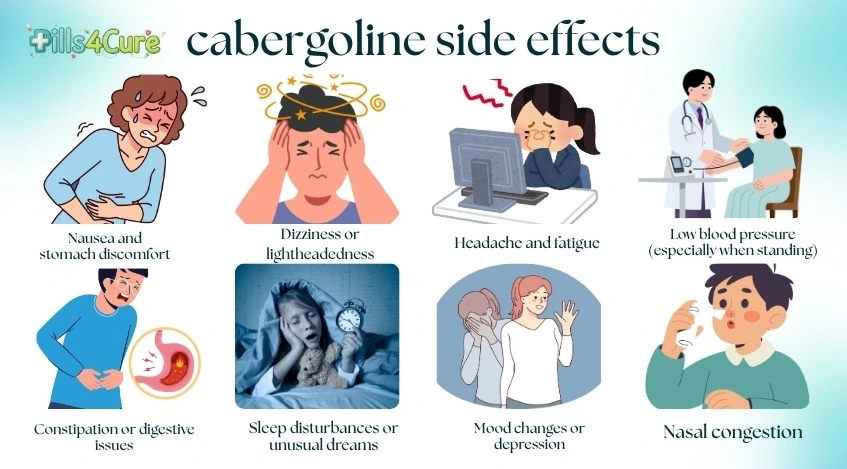
Cabergoline Side Effects: Common, Serious, Long-Term & Withdrawal Effects
- By admin
- |
- General Blog
- |
Cabergoline is a dopamine agonist medication widely used to treat high prolactin levels (hyperprolactinemia) and pituitary gland tumors. While it is highly effective, many patients are concerned about cabergoline side effects, particularly long-term risks and safety.
Many patients also wonder why cabergoline is a more expensive medication than others.
Common Side Effects of Cabergoline
Most people experience mild side effects, especially at the start of treatment. These usually improve as the body adjusts.
Nausea or Upset Stomach
Common in the beginning and usually settles over time. Taking it with food may help reduce discomfort.
Dizziness or Lightheadedness
Often due to a drop in blood pressure. Improves gradually, and standing up slowly can help.
Headache
Generally mild and temporary, easing as the body adapts.
Fatigue or Weakness
May occur early in treatment and typically gets better with time.
Constipation
Can happen due to slower digestion. Staying hydrated and eating fiber-rich foods may help.
Moderate Side Effects
Some users may experience symptoms that need attention but are usually not severe.
Low Blood Pressure (Orthostatic Hypotension)
A drop in blood pressure, especially when standing up, can cause dizziness or faintness.
Sleep Disturbances
Changes in sleep patterns, including difficulty sleeping or unusual drowsiness, may occur.
Mood Changes
Some individuals may notice irritability, anxiety, or changes in behavior.
Abdominal Discomfort
Mild stomach pain or uneasiness can occur but usually improves with time.
Serious Side Effects (Rare)
Although uncommon, some effects can be serious and require immediate medical attention.
Shortness of Breath
Difficulty in breathing may indicate a serious reaction and should not be ignored.
Chest Pain
Pain or tightness in the chest needs urgent medical evaluation.
Swelling in Legs or Ankles
Fluid buildup can be a sign of underlying complications.
Irregular Heartbeat
Unusual heart rhythm or palpitations require prompt attention.
Hallucinations or Unusual Behavior
Changes in thinking, behavior, or perception should be reported immediately.
Long-Term Side Effects of Cabergoline
Cabergoline is generally considered safe for long-term use at the low doses prescribed for high prolactin levels. Most people tolerate it well, but regular medical monitoring is recommended to check for rare side effects such as:
Heart Valve Problems
A rare but important concern, as long-term use may affect heart valves.
Fibrosis
This involves thickening or scarring of tissues in organs, which requires careful monitoring.
Mood Changes
Symptoms can include depression, anxiety, irritability, or mood swings.
Regular check-ups and doctor follow-up help detect and reduce these risks early.
Cabergoline Side Effects for Men
Cabergoline is often prescribed to men with hyperprolactinemia. It helps improve testosterone levels and sexual function.
Most side effects in men are mild, such as nausea, dizziness, or fatigue. However, some men may experience hormonal fluctuations, mood changes, or low blood pressure. In rare cases, long-term use may be associated with heart-related complications, which require monitoring.
Cabergoline Side Effects in Women
In women, Cabergoline helps restore menstrual cycles and improve fertility.
Common side effects include nausea, dizziness, headache, and fatigue. Due to hormonal adjustments, some women may notice temporary changes in their menstrual cycle or mood. Rare but serious symptoms like chest discomfort or breathing issues should be evaluated by a doctor.
Side Effects of Stopping Cabergoline
Stopping Cabergoline suddenly can lead to a return of symptoms.
- Return of high prolactin symptoms
- Hormonal imbalance
- Irregular periods (women)
- Reduced libido and erectile dysfunction (men)
- Headaches or vision issues (if tumor present)
- Breast discharge
- Low sex drive or fertility problems
- Mood changes or fatigue
Always stop the medication under medical supervision with gradual dose reduction.
Why Does Cabergoline Cause Side Effects
Cabergoline works by stimulating dopamine receptors in the brain, which helps reduce prolactin levels. However, this same mechanism can affect other body functions such as blood pressure, digestion, and mood, leading to side effects like dizziness, nausea, or fatigue.
How to Reduce Cabergoline Side Effects
- Take the medication with food to reduce nausea
- Follow the prescribed dosage strictly
- Avoid sudden dose changes
- Stay hydrated and maintain a healthy routine
Who Should Avoid Cabergoline
Cabergoline is effective, but it’s not suitable for everyone.
- Heart Valve Disorders: People with existing heart valve problems should avoid this medication, as it may increase the risk of complications, especially with long-term use. Doctor monitoring is essential if it is prescribed.
- Uncontrolled High Blood Pressure: It can affect blood pressure and may worsen uncontrolled hypertension, so it should only be used under proper medical supervision.
- Liver Disease Patients: Since it is processed in the liver, impaired liver function can increase the risk of side effects, requiring careful evaluation.
- History of Mental Health Disorders: It may cause mood changes, hallucinations, or impulsive behavior, so patients with psychiatric conditions need extra caution and monitoring.
- Pregnancy & Breastfeeding: It should only be used if clearly prescribed, as it can suppress milk production and may affect pregnancy.
- Allergic to Ergot-Based Drugs: People allergic to ergot derivatives should avoid it due to the risk of severe allergic reactions.
- Drug Interactions: It should be avoided with certain medications like antipsychotics, some blood pressure drugs, and macrolide antibiotics, as interactions can increase risks.
Is Cabergoline Safe
Cabergoline is generally safe and effective when used to treat conditions like Hyperprolactinemia, but only if taken under a doctor’s supervision.
Why it’s considered safe
- Works well to lower prolactin levels
- Most people tolerate it at low doses
- Side effects are usually mild (nausea, headache, dizziness)
Why doctor monitoring is important
- Correct dosage needs to be adjusted gradually
- Regular blood tests check hormone levels
- Heart monitoring may be required for long-term use
- Helps detect rare but serious side effects early
Final:
Cabergoline is safe only when prescribed and monitored by a doctor. Avoid self-medication.
When to See a Doctor
Seek medical attention if you experience:
- Severe dizziness or fainting
- Persistent vomiting
- Breathing difficulty
- Chest pain

FAQs About Cabergoline Side Effects
Q1. What are the most common side effects of cabergoline?
Ans: The most common side effects include nausea, dizziness, headache, fatigue, and constipation. These are usually mild and temporary.
Q2. Is cabergoline safe for long-term use?
Ans: Yes, Cabergoline is generally safe when used under medical supervision. However, long-term use may require monitoring for heart-related risks.
Q3. Can cabergoline cause weight gain?
Ans: Weight gain is not a common side effect, but hormonal changes may indirectly affect weight in some individuals.
Q4. What happens if I stop cabergoline suddenly?
Ans: Stopping suddenly can cause prolactin levels to rise again, leading to the return of symptoms. Always consult a doctor before stopping.
Q5. Can cabergoline cause weight loss?
Ans: Cabergoline can cause mild weight loss in some people, usually due to reduced appetite or side effects like nausea. However, it is not mainly used for weight loss.
Source
Clveland Clinc – Cabergoline Side Effect