
Sorry, nothing in cart.
Welcome to Pills4cure
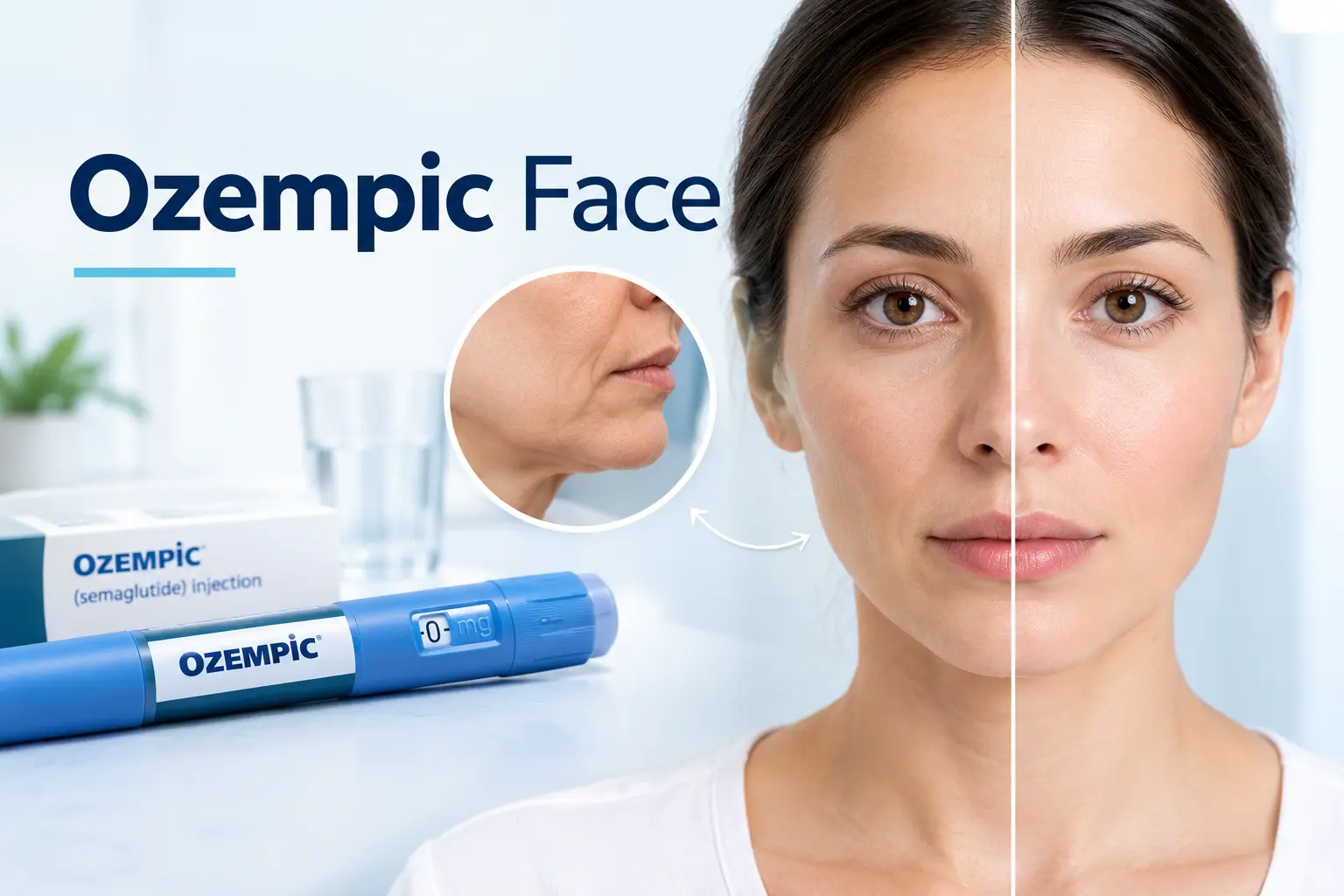
Ozempic Face: Why It Happens and What You Can Do
- By admin
- |
- General Blog
- |
Ozempic face is a term commonly used to describe facial changes that can happen after significant weight loss while using Ozempic (semaglutide). These changes may include a loss of facial fullness, more visible wrinkles, loose or sagging skin, and a thinner-looking face.
The term “Ozempic face” can be misleading because these changes are generally linked to rapid weight loss and changes in facial fat and skin, rather than being a unique disease or a separate medical condition caused by Ozempic.
What Is Ozempic Face?
Ozempic face refers to noticeable changes in facial appearance that can occur after rapid or significant weight loss while taking Ozempic, Wegovy, and Mounjaro. Ozempic is an approved medication for the treatment of type 2 diabetes. It contains the active ingredient semaglutide, which can help regulate appetite, increase feelings of fullness, and reduce food cravings. Because of its effects on appetite and body weight, Ozempic may be prescribed off-label for weight loss.
Does Ozempic Directly Cause Facial Aging?
Ozempic does not appear to directly cause facial aging. The facial changes commonly called “Ozempic face” are generally associated with rapid or significant weight loss, which can reduce facial fat and make wrinkles, hollow areas, or loose skin more noticeable.
Interestingly, recent research has found that semaglutide associated with slower epigenetic aging. One 2026 study found an approximately 9% slower pace of aging based on the DunedinPACE epigenetic marker after 32 weeks of semaglutide treatment. However, this does not mean that semaglutide reverses aging or prevents facial aging, and the findings cannot yet be applied to the general population.
What Does Ozempic Face Look Like?
The changes can be different from person to person. Commonly reported changes include:
1. Loss of Facial Fullness: The cheeks may look less full after losing facial fat.
2. Hollow-Looking Cheeks or Temples: Reduced facial fat can make the cheeks or temples appear more sunken.
3. More Visible Wrinkles: When facial volume decreases, existing lines and wrinkles may become easier to notice.
4. Loose or Sagging Skin: After significant weight loss, the skin may not immediately tighten around the smaller amount of underlying tissue.
5. Thinner or Crepey Skin: Some people may notice a thinner or more crepe-like skin texture. The AAD lists reduced facial fullness, sagging, wrinkles and crepe-like texture among facial changes reported with GLP-1 medicines.
Can You Treat Ozempic Face?
Treatment depends on what is bothering you and how much facial volume or skin elasticity has changed.
Skin Care
A simple routine with a gentle cleanser, moisturiser and sunscreen can support healthy skin. Some people may also benefit from products containing retinoids, although these can cause irritation and are not suitable for everyone.
Dermal Fillers
Dermal fillers can restore volume in selected areas of the face. The AAD lists soft-tissue fillers as one option dermatologists may use to address facial volume loss after GLP-1-associated weight loss.
Fat Transfer
A fat transfer uses fat from another part of the body to restore volume to areas of the face. This is a medical procedure and should be discussed with a qualified specialist.
Skin-Tightening Treatments
Depending on the amount of loose skin, dermatologists may consider treatments such as radiofrequency, ultrasound or laser procedures. Results vary, and these treatments cannot always reproduce the volume or lifting effect of surgery.
Should You Stop Ozempic Because of Ozempic Face?
Do not stop Ozempic on your own because of changes in your appearance.
Ozempic is a prescription medicine used to manage type 2 diabetes, and semaglutide is also used in other formulations for weight management.
If you are concerned about facial changes, speak with the healthcare professional who prescribed your medicine. They can review your weight-loss progress, treatment goals, dose and overall health and discuss whether any changes are appropriate.
When Should You Speak to a Doctor?
Speak with your doctor if:
- You are losing weight much faster than expected.
- You are struggling to eat or drink enough.
- You have persistent vomiting or severe nausea.
- You are concerned about significant changes in your appearance.
- You are considering changing or stopping your medicine.
- You want to explore cosmetic treatments.
Semaglutide can cause side effects such as nausea, vomiting, constipation, diarrhoea and tiredness. The NHS advises speaking with a pharmacist or doctor if side effects are troublesome or do not go away.
Takeaway
Ozempic face is mainly a term for facial changes associated with significant weight loss, such as reduced facial fullness, wrinkles and sagging skin. It does not happen to everyone taking Ozempic, and the extent of the changes varies between individuals.
If you are concerned about your appearance while taking semaglutide, focus on healthy and steady weight management rather than trying to lose weight faster. Talk with your healthcare professional before changing your treatment, and consider seeing a dermatologist if facial volume loss or skin changes continue to bother you.

Frequently Asked Questions
Q1. Does Ozempic make your face look older?
Ans: Significant weight loss can reduce facial fullness and make wrinkles or loose skin more noticeable. This may make some people feel that their face looks older.
Q2. Can Ozempic face go away?
Ans: Some facial changes may become less noticeable as your weight stabilises, but this varies from person to person. Persistent loss of facial volume or loose skin may require advice from a dermatologist or other qualified healthcare professional.
Q3. Can fillers help with Ozempic face?
Ans: Dermal fillers can restore facial volume in some people. A qualified dermatologist or appropriately trained medical professional should assess whether fillers are suitable for you.