
Sorry, nothing in cart.
Welcome to Pills4cure
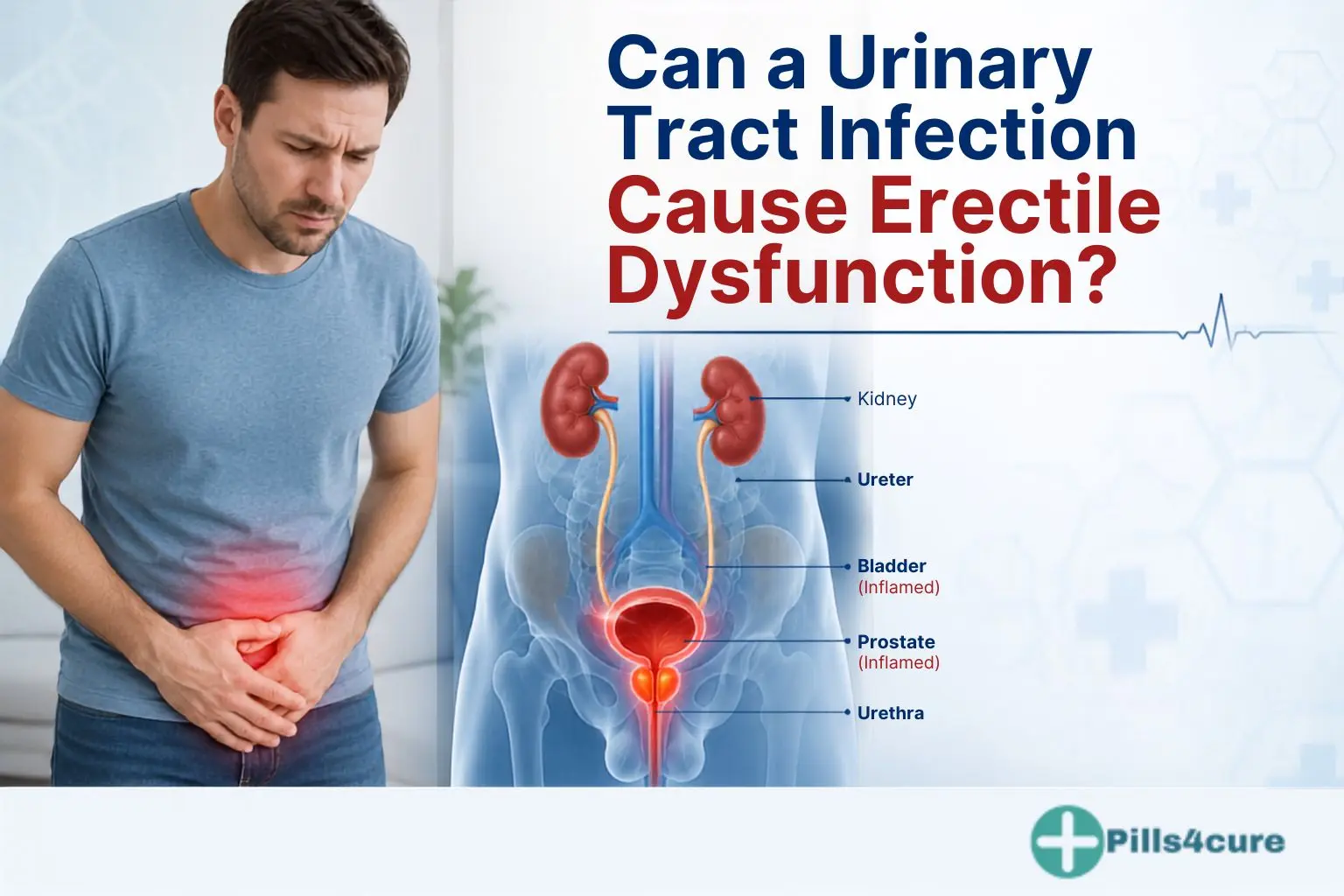
Can a Urinary Tract Infection Cause Erectile Dysfunction?
- By admin
- |
- General Blog
- |
Urinary tract infections (UTIs) are a common bacterial infection that can cause symptoms such as painful urination, frequent urination, and pelvic discomfort. Can a urinary tract infection cause erectile dysfunction? If you notice erection problems while dealing with a UTI, it’s natural to ask this question. In most cases, a UTI does not directly cause permanent erectile dysfunction (ED). Though there is no evidence that UTIs directly cause ED, sexual dysfunction can occur at the same time and may share underlying factors. [1]
What Is a Urinary Tract Infection (UTI)
A urinary tract infection (UTI) is a bacterial infection that affects any part of the urinary tract, including the kidneys, ureters, bladder, and urethra. Most UTIs occur when bacteria (germs), especially Escherichia coli (E. coli), enter the urethra and travel into the bladder, where they multiply and cause infection, often causing burning or pain when you pee. If left untreated, the infection can spread to the kidneys and become more serious. [2]
Can a UTI Cause Erectile Dysfunction?
Although a urinary tract infection (UTI) does not directly cause erectile dysfunction (ED), some men may have trouble getting or keeping an erection while they have a Urinary Tract Infection. Pain, inflammation, urinary symptoms, and prostate infection can affect sexual function. In most cases, these erection problems improve after the infection is treated.
Here are some reasons why a UTI may temporarily affect erectile function:
Inflammation
A Urinary Tract Infection triggers inflammation as your body fights the infection. In some cases, this inflammation can swell nearby tissues, including the prostate, causing discomfort that may interfere with normal erectile function.
Pain and Discomfort
Burning during urination, pelvic pain, and lower abdominal discomfort can make sexual activity uncomfortable. This pain may reduce confidence and make it difficult to achieve or maintain an erection.
Prostate Infection (Prostatitis)
If the infection spreads to the prostate, it can cause prostatitis. An inflamed prostate may lead to pelvic pain, painful ejaculation, and temporary erectile problems. Men with prostatitis are more likely to experience sexual dysfunction than those with a simple bladder infection.
Reduced Sexual Desire
Feeling unwell, having a fever, or dealing with ongoing urinary symptoms can lower your interest in sex. Reduced sexual desire during a Urinary Tract Infection is common and usually improves as the infection clears.
Temporary Erection Problems
For most men, erection problems linked to a UTI are temporary. Once the infection is treated and symptoms such as pain and inflammation resolve, erectile function often returns to normal. If ED continues after the infection has completely cleared, another underlying condition may be responsible and should be evaluated by a healthcare provider.
How Common Is ED During a UTI?
Erectile dysfunction (ED) is not common during a simple bladder infection. However, some men may experience temporary erection problems, especially if:
- The infection has spread to the prostate (prostatitis)
- UTI symptoms are severe or painful
- The infection is left untreated
- They already have mild erectile dysfunction or another underlying health condition
Men over 50 may be more likely to experience both UTIs and ED because they often share risk factors, such as an enlarged prostate, diabetes, and age-related changes in blood vessels.[3]
How Long Does ED Last After a UTI?
If a Urinary Tract Infection temporarily affects erectile function, erections usually improve as the infection clears. For most men, any erection problems go away within a few days to a few weeks after starting the right treatment. However, if ED continues after the Urinary Tract Infection has completely resolved, it may be caused by another underlying condition, such as diabetes, prostate disease, or poor blood flow. In that case, it is important to see a healthcare provider for further evaluation.
ED Medications
Erectile dysfunction (ED) medications help increase blood flow to the penis, making it easier to get and maintain an erection during sexual stimulation. Common ED medications include sildenafil (Viagra), tadalafil (Cialis), vardenafil (Levitra), and avanafil (Stendra). These medicines treat the symptoms of ED but do not cure the underlying cause. They should only be used under the guidance of a healthcare provider, especially if you have heart disease, low blood pressure, or take nitrate medications.
Therapy and Lifestyle Changes
If you’re wondering, can a urinary tract infection cause erectile dysfunction (ED)? The answer is that a UTI does not usually cause permanent ED. However, if erectile dysfunction continues after a urinary tract infection has been treated, therapy and healthy lifestyle changes may help improve sexual function. Regular exercise, a balanced diet, maintaining a healthy weight, getting enough sleep, managing stress, limiting alcohol, and quitting smoking can all support better blood flow and overall sexual health. If stress, anxiety, or relationship issues are contributing to ED, counseling or sex therapy may also be beneficial. Making these changes can improve erectile function and support long-term health.

Frequently Asked Questions (FAQs)
Q1. Can a UTI go away on its own?
Ans: Some mild UTIs may clear without treatment, but most bacterial UTIs require antibiotics. Delaying treatment can increase the risk of the infection spreading to the kidneys or causing other complications.
Q2. How long does it take for a UTI to go away with antibiotics?
Ans: Many people start to feel better within 24 to 48 hours after starting antibiotics. However, it is important to finish the entire prescribed course, even if symptoms improve, to fully clear the infection.
Q3. Can ED be reversed without medication?
Ans: Yes, in some cases. If ED is caused by a temporary condition such as a UTI, stress, poor sleep, or unhealthy lifestyle habits, it may improve after treating the underlying cause and making healthy lifestyle changes. Persistent ED should be evaluated by a healthcare provider.
Q4. What are the first signs of a UTI in men?
Ans: Early signs of a UTI in men include a burning sensation while urinating, frequent or urgent urination, cloudy or foul-smelling urine, pelvic discomfort, and pain in the lower abdomen. Some men may also notice blood in the urine or develop a fever if the infection becomes more severe.
Reffrence
[1] ro
[2] What Is a Urinary Tract Infection (UTI) – my.clevelandclinic
[3] How Common Is ED During a UTI? – ubiehealth