
Sorry, nothing in cart.
Welcome to Pills4cure
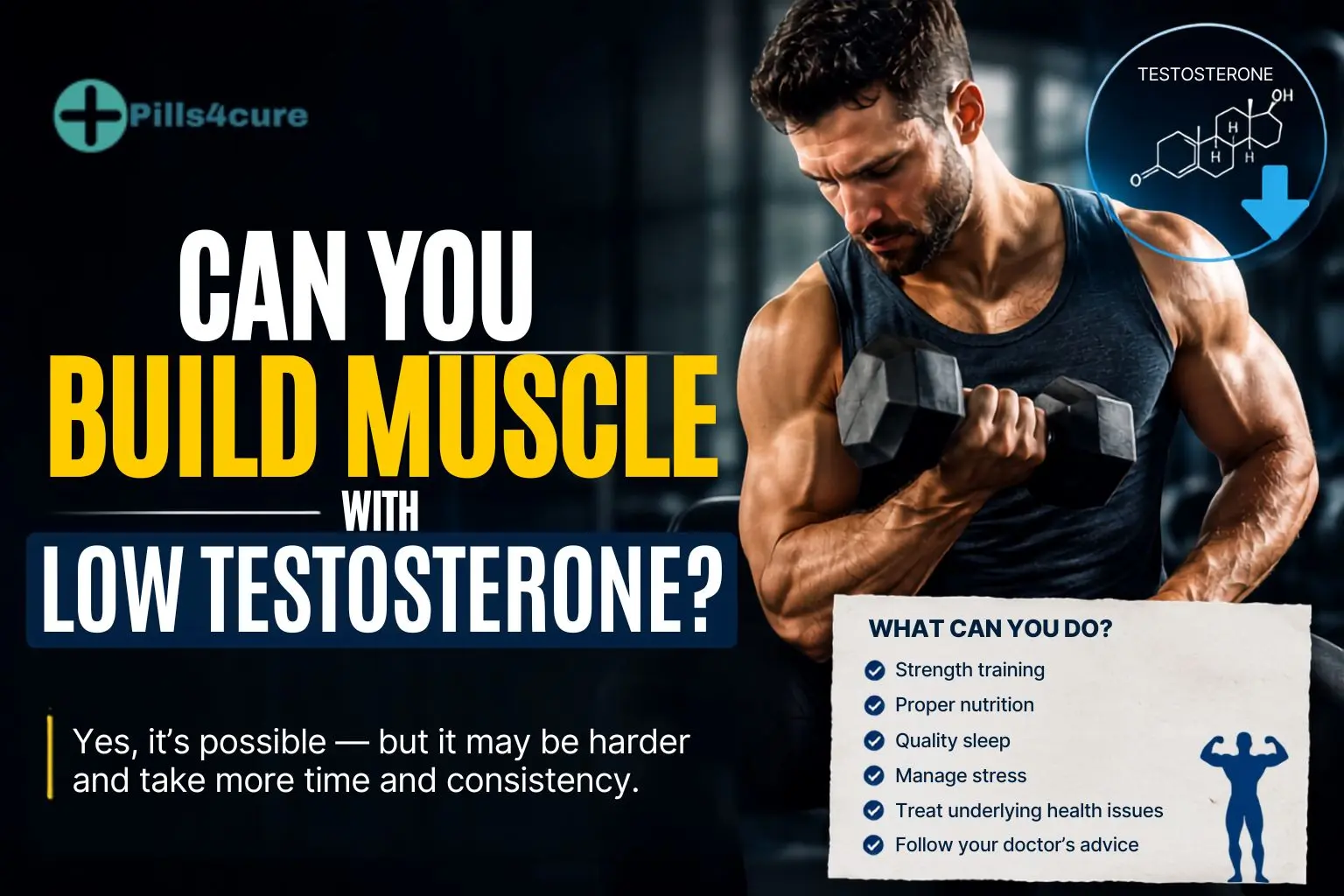
Can You Build Muscle With Low Testosterone?
- By admin
- |
- General Blog
- |
Low testosterone can affect muscle mass, strength, and recovery, which often leaves people wondering: Can you build muscle with low testosterone? The answer depends on more than just your hormone levels. Factors such as your age, overall health, workout routine, and nutrition all play a role. In this article, we’ll explore what science says, why some people still gain muscle despite low testosterone, and what can make the biggest difference in your results.
What Is Low Testosterone?
Low testosterone, also called male hypogonadism, occurs when the testicles do not produce enough testosterone. Testosterone is the primary male sex hormone responsible for building and maintaining muscle mass, increasing muscle size and strength, supporting bone health, regulating sex drive, producing red blood cells, and maintaining energy levels.
What are signs of low T
Common signs of low testosterone include low sex drive (low libido), loss of morning or spontaneous erections, and difficulty getting or maintaining an erection. Men may also experience fatigue, low energy, reduced motivation, depressed mood, poor concentration, memory problems, loss of muscle mass and strength, difficulty building muscle, decreased endurance, increased body fat, and enlarged male breast tissue (gynecomastia). In more severe cases, low testosterone can cause loss of armpit and pubic hair, shrinking testicles, hot flashes, and a low or zero sperm count (azoospermia), which may affect fertility. Symptoms often develop gradually and become more noticeable as testosterone levels continue to decline[1].
How does low testosterone affect muscle?
Testosterone plays a key role in building, gaining, and maintaining muscle mass.If you have low testosterone (low T), muscle protein synthesis slows down, making it more difficult for your body to repair and grow muscle after resistance training. As a result, you may experience slower muscle growth, reduced strength, loss of lean muscle mass, and longer recovery times.
Testosterone levels naturally decline with age, usually beginning around age 30. On average, they decrease by about 1% per year. While this gradual decline is normal, some men develop symptoms of low T that can affect muscle mass, strength, energy levels, and recovery.
How Can I Boost My Testosterone Levels?
If you have low testosterone, the best approach depends on the underlying cause. Healthy lifestyle changes may support natural testosterone production, while some men with clinically low T may require medical treatment.
- Exercise Regularly – Strength training and resistance exercises can help support healthy testosterone levels and muscle growth.
- Maintain a Healthy Weight – Losing excess body fat may improve testosterone levels.
- Eat a Balanced Diet – Include lean protein, healthy fats, whole grains, fruits, and vegetables. Make sure you get enough vitamin D, zinc, and magnesium.
- Get Enough Sleep – Aim for 7–9 hours of quality sleep each night.
- Manage Stress – Reducing stress may help maintain healthy hormone levels.
- Limit Alcohol and Avoid Smoking – These habits can negatively affect testosterone production.
- Treat Underlying Health Conditions – Managing conditions like obesity, diabetes, or sleep apnea may help improve testosterone levels.
- Consider Testosterone Replacement Therapy (TRT) – If blood tests confirm low T, your doctor may recommend TRT to restore normal hormone levels. It should only be used under medical supervision.
Best Exercises for Building Muscle With Low Testosterone
If you have low testosterone, the right exercise routine can still help you build and maintain muscle. The key is to focus on resistance training and gradually increase the intensity over time. Compound exercises are especially effective because they work multiple muscle groups at once and help improve overall strength.
1. Squats: Squats target the quadriceps, hamstrings, glutes, and core. They are one of the best exercises for building lower-body strength and muscle mass.
2. Deadlifts: Deadlifts work the back, glutes, hamstrings, and core. They help increase overall strength and stimulate multiple muscle groups in a single movement.
3. Bench Press: The bench press strengthens the chest, shoulders, and triceps. It is a staple exercise for improving upper-body muscle mass and strength.
4. Pull-Ups or Lat Pulldowns: These exercises target the back and biceps, helping improve upper-body strength and muscle development.
5. Overhead Press: The overhead press builds the shoulders, upper chest, and triceps, while also improving core stability.
Does TRT Help Build Muscle?
Yes, Testosterone Replacement Therapy (TRT) may help build muscle, but only in men with clinically low testosterone (hypogonadism). TRT restores testosterone levels to the normal range, which can improve the body’s ability to build and maintain lean muscle mass when combined with regular resistance training and a healthy diet.
Research suggests that TRT may help:
- Increase lean muscle mass
- Improve muscle strength
- Reduce muscle loss
- Support muscle protein synthesis
- Improve exercise performance and recovery
However, TRT is not a shortcut to building muscle and should not be used by men with normal testosterone levels for bodybuilding or athletic performance. Muscle growth still depends on consistent strength training, adequate protein intake, proper nutrition, and sufficient rest.
When Should You See a Doctor?
If you’re struggling to build muscle despite consistent exercise and a healthy diet, it may be worth talking to a healthcare provider—especially if you have other symptoms of low testosterone. A doctor can evaluate your symptoms, perform blood tests, and determine whether low testosterone or another medical condition is affecting your muscle growth.
You should see a doctor if you experience:
- Difficulty building or maintaining muscle despite regular strength training
- Persistent fatigue or low energy
- Loss of muscle mass or reduced strength
- Low sex drive (low libido)
- Erectile dysfunction
- Increased body fat
- Depression, irritability, or mood changes
- Slow recovery after workouts
If low testosterone is suspected, your doctor may recommend morning blood tests to measure your testosterone levels. If a deficiency is confirmed, they can discuss appropriate treatment options, including lifestyle changes or Testosterone Replacement Therapy (TRT) when medically indicated.

Frequently Asked Questions (FAQs)
Q1. Can you build muscle with low testosterone?
Ans:Yes. You can still build muscle with low testosterone, but muscle growth is usually slower. Regular strength training, proper nutrition, adequate protein, and quality sleep are essential for the best results.
Q2. Can low testosterone cause muscle loss?
Ans: Yes. Low testosterone can reduce muscle protein synthesis and increase muscle breakdown, making it harder to maintain lean muscle mass and strength.
Q3. Does Testosterone Replacement Therapy (TRT) help build muscle?
Ans: TRT may help increase lean muscle mass and strength in men with clinically low testosterone. It should only be used under the supervision of a healthcare provider after proper testing.
Q4. What are the signs that low testosterone is affecting muscle growth?
Ans: Common signs include difficulty building muscle, loss of muscle mass, reduced strength, slower workout recovery, persistent fatigue, and increased body fat.
Q5. When should I see a doctor for low testosterone?
Ans: You should see a doctor if you have ongoing symptoms such as difficulty building muscle, low energy, reduced sex drive, erectile dysfunction, or loss of muscle despite regular exercise and a healthy diet. A blood test can help determine if low testosterone is the cause.
Sources
[1] What are signs of low T – my.clevelandclinic