
Sorry, nothing in cart.
Welcome to Pills4cure

Dehydration Causes Symptoms Treatment and Prevention
- By admin
- |
- General Blog
- |
Dehydration is a common health condition that happens when your body loses more fluids than it takes in. Water is essential for almost every function in the body, including maintaining temperature, supporting organs, and keeping energy levels stable. When the body does not get enough fluids, it can lead to discomfort and even serious health problems.
Understanding this condition is important because it can affect anyone at any age. From mild tiredness to severe complications, the impact of fluid loss can vary widely. Learning how to identify the symptoms of dehydration and how to prevent it can help you stay healthy and active.
What is Dehydration
Dehydration is a condition in which the body lacks sufficient water to carry out normal functions. Along with water loss, the body also loses important electrolytes such as sodium and potassium. These electrolytes help maintain fluid balance and support nerve and muscle activity.
When hydration levels drop, the body struggles to perform basic processes like digestion, circulation, and temperature control. Even mild fluid loss can affect how you feel and function throughout the day.
Causes of Dehydration
There are many causes of dehydration, and they often depend on lifestyle, environment, and health conditions. One of the most common reasons is simply not drinking enough water during the day. Many people ignore thirst signals, which can gradually lead to fluid loss.
Hot weather is another major factor. When temperatures rise, the body sweats more to cool itself, leading to increased water loss. Physical activity also contributes, especially if fluids are not replaced after exercise.
Illness can also play a significant role. Conditions like fever, vomiting, and diarrhea can quickly drain fluids from the body. In addition, excessive urination due to medical conditions or certain medications can increase the risk.
Caffeine and alcohol consumption can also contribute to fluid imbalance because they promote water loss. All these factors combined highlight the importance of maintaining proper hydration.
Signs and Symptoms
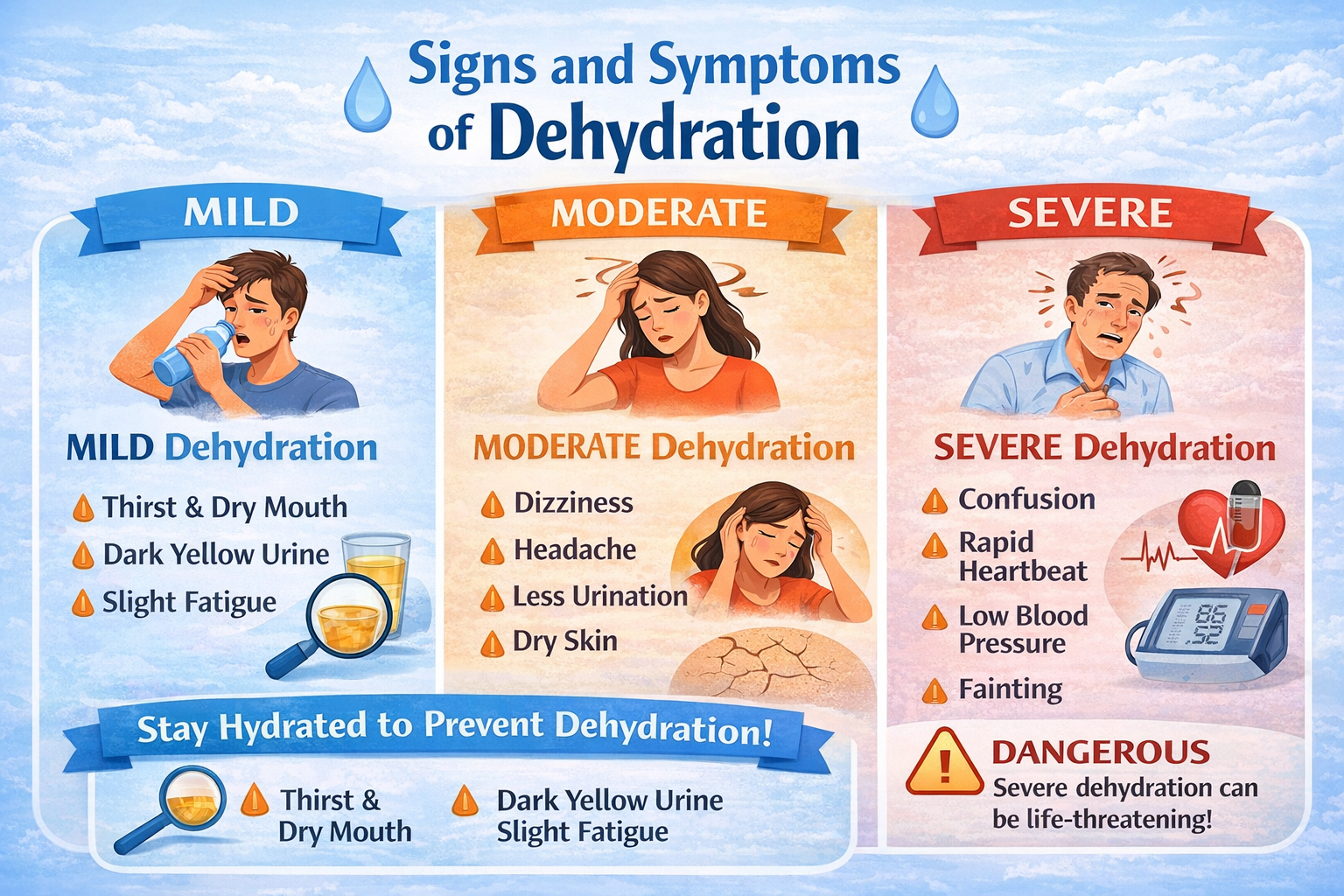
The symptoms of dehydration can range from mild to severe, depending on how much fluid the body has lost. Early signs are often easy to miss but should not be ignored.
In mild cases, a person may feel thirsty, notice a dry mouth, or experience slight fatigue. Urine may appear darker than usual, which is a clear indicator of low hydration.
As the condition becomes moderate, symptoms may include dizziness, headaches, reduced urination, and dry skin. At this stage, the body is already struggling to maintain fluid balance.
Severe cases are a serious condition and can cause confusion, rapid heartbeat, low blood pressure, and fainting. In extreme situations, it can become life threatening if not treated quickly.
Effects of Dehydration on the Body
Fluid deficiency affects multiple systems in the body and can reduce overall performance. One of the first effects is a drop in energy levels, which can make you feel tired and weak even without much activity.
The brain is also affected. Lack of proper hydration can lead to poor concentration, mood changes, and headaches. This can impact daily productivity and mental clarity.
The kidneys rely on adequate fluid levels to function properly. Lack of fluids can increase the risk of kidney stones and other complications. Digestion may also slow down, leading to constipation and discomfort.
Muscles are another area impacted by water loss. Without proper electrolyte balance, muscle cramps and spasms can occur, especially during physical activity.
Dehydration in Children and Elderly
Children and older adults are more vulnerable to this condition and require extra care. In children, fluid loss can develop quickly, especially during illnesses like diarrhea or vomiting. They may not always express thirst clearly, making it harder to detect early signs.
In elderly individuals, the sense of thirst naturally decreases with age. This means they may not feel the need to drink water even when their body requires it. Additionally, certain medications and health conditions can increase fluid loss.
Because of these factors, it is important to monitor hydration levels closely in both groups and encourage regular fluid intake.
How to Treat
Treatment depends on its severity. Mild cases can usually be managed at home by increasing fluid intake. Drinking water regularly throughout the day helps restore hydration levels. Consuming fruits with high water content can also support recovery.
Oral rehydration solutions are especially helpful because they contain the right balance of water and electrolytes. Resting in a cool environment also allows the body to recover more effectively.
In more serious cases, medical treatment may be required. Doctors may administer intravenous fluids to quickly restore fluid balance. Treating the underlying cause, such as infection or illness, is also important for full recovery.
Best Drinks for Dehydration Recovery
Choosing the right drinks plays a key role in recovery. Water remains the most effective and essential option for hydration because it is easily absorbed by the body.
Some of the best drinks include:
- Water for basic hydration
- Oral rehydration solutions for electrolyte balance
Coconut water and fresh fruit juices can also support recovery, as they provide additional minerals and nutrients. However, drinks like alcohol, excessive caffeine, and sugary sodas should be avoided because they can worsen the condition.
How to Prevent Dehydration
Prevention requires simple daily habits. Drinking enough water throughout the day is the most effective way to maintain hydration. It is important to increase fluid intake during hot weather or physical activity.
Eating fruits and vegetables that contain high amounts of water can also support hydration. Developing habits such as carrying a water bottle and setting reminders can help maintain consistency.
Key prevention tips include:
- Drink water regularly, even if you are not thirsty
- Monitor urine color to check hydration levels
Following these habits can help you maintain proper fluid balance and avoid this issue.
When to See a Doctor
While mild cases can be treated at home, there are situations where medical help is necessary. If symptoms do not improve after increasing fluid intake, it may indicate a more serious issue.
Persistent vomiting or diarrhea can lead to rapid fluid loss and requires medical attention. Signs such as confusion, fainting, or very low urine output should not be ignored.
In such cases, consulting a doctor is important to prevent complications and ensure proper treatment.
Conclusion
Dehydration is a condition that can affect anyone, but it is also highly preventable. By understanding the causes of dehydration and recognizing the symptoms early, you can take the right steps to stay healthy.
Maintaining proper hydration supports every function in the body, from energy levels to organ health. Simple habits like drinking enough water and eating hydrating foods can make a big difference. Staying aware and proactive is the key to avoiding fluid imbalance and living a healthier life.

FAQs
Q1. What are the early symptoms of dehydration
Ans: Early symptoms of dehydration include thirst, dry mouth, fatigue, and dark colored urine.
Q2. How much water should I drink daily
Ans: Most people should aim for 8 to 10 glasses of water per day, depending on their activity level and environment.
Q3. Can dehydration cause weakness
Ans: Yes, dehydration can reduce energy levels and cause weakness and tiredness.
Q4. What is the fastest dehydration treatment
Ans: Drinking water or oral rehydration solutions is the quickest way to treat mild dehydration.
Q5. Who is at higher risk of dehydration
Ans: Children, elderly individuals, and people with certain illnesses are at higher risk.