
Sorry, nothing in cart.
Welcome to Pills4cure
Weakened Erections: Causes, Treatment, and Prevention
- By admin
- |
- General Blog
- |
Weakened erections (weak erections), commonly referred to as soft erectile dysfunction (ED), can affect men at any stage of life. Though occasional difficulties are normal, persistent problems achieving or maintaining an erection strong enough for sexual intercourse may indicate an underlying health issue. This condition not only impacts physical intimacy but also contributes to emotional stress, relationship problems, and reduced self-esteem. Fortunately, weak erections are treatable, and in many cases, reversible with the right medical approach and lifestyle changes.
What Are Weakened Erections?
A weak erections is defined as the inability to achieve or maintain an erection that is firm enough for satisfactory sexual performance. While it’s common for men to experience erection issues occasionally due to stress, fatigue, or alcohol, recurrent problems signal a deeper concern.
Degrees of Erection Weakness:
- Mild: Men may experience partial or inconsistent erections, often triggered by stress or fatigue. While occasional, it can affect confidence and hint at early health concerns.
- Moderate: An erection is achieved but is lost before climax, causing frustration and reduced satisfaction. This often signals an underlying physical or psychological issue.
- Severe: Complete inability to get an erection, regardless of arousal. It severely affects intimacy and may be linked to serious health problems, requiring medical evaluation.
Prevalence
Weakened erections are more common than many think. According to research:
- 40% of men experience some form of ED by age 40.
- The percentage increases to nearly 70% by age 70.
- Younger men are not immune; lifestyle habits contribute significantly to increasing cases in men under 40.
Symptoms of Weakened Erections
The primary symptom is difficulty in getting or maintaining an erection. However, other associated signs may include:
- Reduced sexual desire (libido)
- Delayed or premature ejaculation
- Decreased penile rigidity
- Performance anxiety or depression related to sexual activity
Common Causes of Weakened Erections
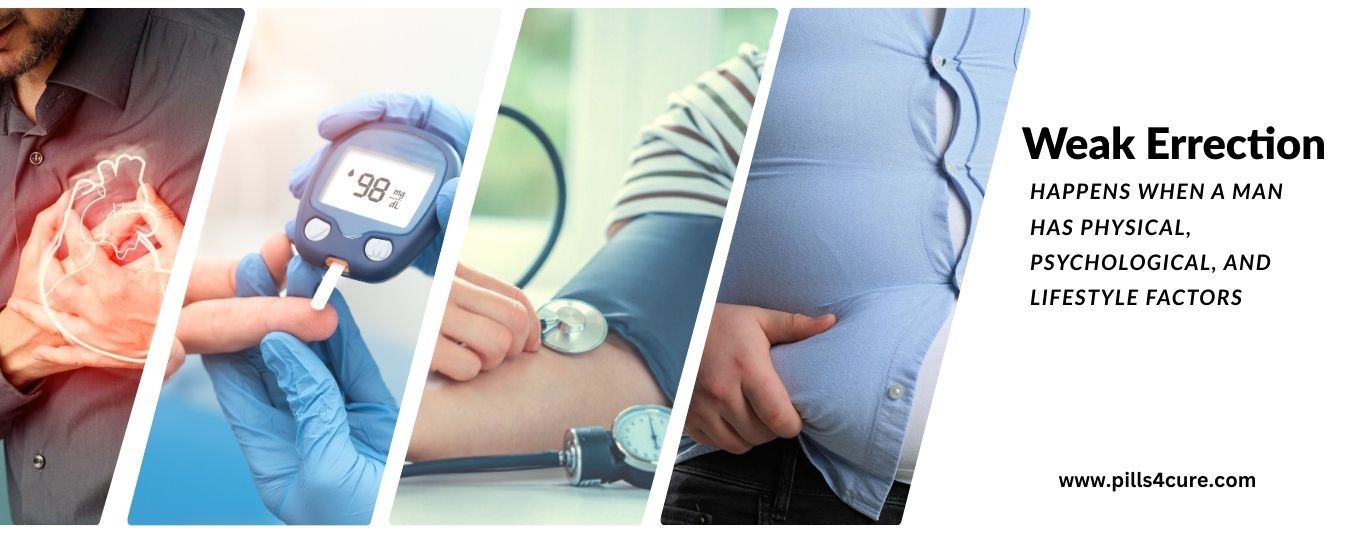
Several physical and psychological factors contribute to Soft erectile dysfunction. Sometimes it’s a combination of both.
- Physical Causes
- Cardiovascular disease: Poor blood flow is the leading physical cause.
- Diabetes: Damages blood vessels and nerves in the penis.
- High blood pressure: Affects arterial function.
- High cholesterol: Leads to atherosclerosis, reducing penile blood flow.
- Obesity: Increases estrogen levels and lowers testosterone.
- Low testosterone: Decreased libido and erection problems.
- Neurological disorders: Multiple sclerosis, Parkinson’s disease, and spinal injuries.
- Kidney disease: Impairs hormone balance and blood circulation.
- Peyronie’s disease: Curvature of the penis due to scar tissue.
- Substance abuse: Excessive alcohol, tobacco, or drug use damages erectile function.
- Psychological Causes
- Stress: Daily stressors from work, finances, or life can impact performance.
- Anxiety: Fear of failure leads to performance anxiety.
- Depression: Decreases sexual desire and affects hormonal balance.
- Relationship issues: Lack of communication or emotional intimacy.
- Medications
Several prescribed drugs can contribute to weak erections, such as:
- Antidepressants (SSRIs)
- Blood pressure medications (beta-blockers, diuretics)
- Antihistamines
- Anti-anxiety drugs
- Hormone therapies
Diagnosis of Erectile Dysfunction
If weakened erections persist, it’s essential to consult a healthcare provider. A proper diagnosis involves:
- Medical History
Your doctor may ask:
- Onset and frequency of erection issues
- Presence of other health conditions
- Sexual history and libido
- Use of medications or substances
- Physical Examination
This may include:
- Penis and testicle examination
- Checking for nerve function
- Blood pressure monitoring
- Laboratory Tests
- Blood tests: To detect diabetes, low testosterone, and high cholesterol
- Urinalysis: To find signs of underlying medical conditions
- Ultrasound: To examine blood flow to the penis
- Overnight erection test (nocturnal penile tumescence): Determines whether erections occur during sleep
Treatment for weak erections
Treatment depends on the underlying cause. Often, a combination of approaches yields the best result.
- Oral Medications (PDE5 Inhibitors)
- Sildenafil (Viagra)
- Tadalafil (Cialis)
- Vardenafil (Levitra)
- Avanafil (Stendra)
These drugs increase blood flow to the penis and are effective in 70–80% of men. However, they should not be taken with nitrate medications.
- Hormone Therapy
For men with low testosterone, hormone replacement therapy may help restore sexual function and desire.
- Penile Injections
Medications like alprostadil are injected directly into the penis to stimulate an erection.
- Vacuum Erection Devices (VEDs)
A vacuum pump draws blood into the penis, followed by a constriction ring to maintain the erection.
- Penile Implants
A surgical option involving inflatable or semi-rigid rods placed into the penis, recommended for those who don’t respond to other treatments.
- Counseling and Therapy
For psychological causes, cognitive-behavioral therapy (CBT), sex therapy, or couples counseling can significantly improve symptoms.
- Lifestyle Modifications
- Quit smoking
- Reduce alcohol intake
- Exercise regularly
- Eat a balanced diet
- Sleep well
- Reduce stress
Natural Remedies and Supplements
While some herbal remedies claim to improve erections, always consult a healthcare provider before trying these:
- L-arginine: Boosts nitric oxide levels for better blood flow
- Panax ginseng: May improve sexual function
- Yohimbe: Derived from African tree bark, but may have serious side effects
- DHEA: A hormone precursor that may help in low testosterone cases
Note: These supplements are not FDA-approved for ED and may interact with other medications.
Tips to Avoid Weak Erections
- Manage Chronic Illnesses
Keep conditions like diabetes, high blood pressure, and heart disease under control with proper medication and monitoring.
- Maintain a Healthy Weight
Obesity increases the risk of hormonal imbalance and vascular issues, contributing to ED.
- Be Physically Active
Aim for 30 minutes of moderate-intensity exercise daily. Aerobic activity improves circulation and cardiovascular health.
- Limit Substance Use
Reduce or eliminate the use of alcohol, tobacco, and recreational drugs.
- Strengthen Relationships
Open communication with your partner reduces anxiety and helps address underlying issues together.
- Get Regular Sleep
Sleep deprivation affects hormone levels and leads to fatigue, impacting sexual performance.
When to See a Doctor
You should consult a healthcare professional if:
- You experience frequent or persistent erection problems.
- ED interferes with your sexual relationships.
- You have risk factors like diabetes or cardiovascular disease.
- You notice symptoms like reduced libido, fatigue, or mood changes.
Timely intervention can prevent complications like:
- Relationship breakdown
- Anxiety or depression
- Fertility problems
- Reduced quality of life
Coping with the Emotional Impact
Erectile dysfunction can be emotionally challenging. Men often internalize their experiences, leading to feelings of inadequacy or guilt. Consider the following coping strategies:
- Talk about it: Share your feelings with a trusted partner or counselor.
- Join support groups: Many online and in-person groups offer emotional support.
- Focus on intimacy: Remember that intimacy is more than intercourse—focus on building emotional and physical closeness.
- Educate yourself: Learning about ED removes the stigma and encourages treatment.
Myths and Facts about Weak Erections
Myth 1: Only older men suffer from ED.
Fact: ED can affect men at any age due to lifestyle, stress, or health conditions.
Myth 2: ED means you’re not attracted to your partner.
Fact: ED is often physical or psychological and not necessarily linked to attraction.
Myth 3: ED is a normal part of aging and can’t be treated.
Fact: While aging increases risk, effective treatments exist regardless of age.
Myth 4: Viagra is the only solution.
Fact: Many options exist, including lifestyle changes, therapy, and non-drug treatments.
Final Thoughts
Weakened erections can be distressing, but they are neither uncommon nor untreatable. Whether caused by physical health, emotional concerns, or lifestyle habits, the key to resolution lies in open communication, proper diagnosis, and a comprehensive treatment plan. With modern medicine, counseling, and self-care, most men can regain their confidence and sexual health.